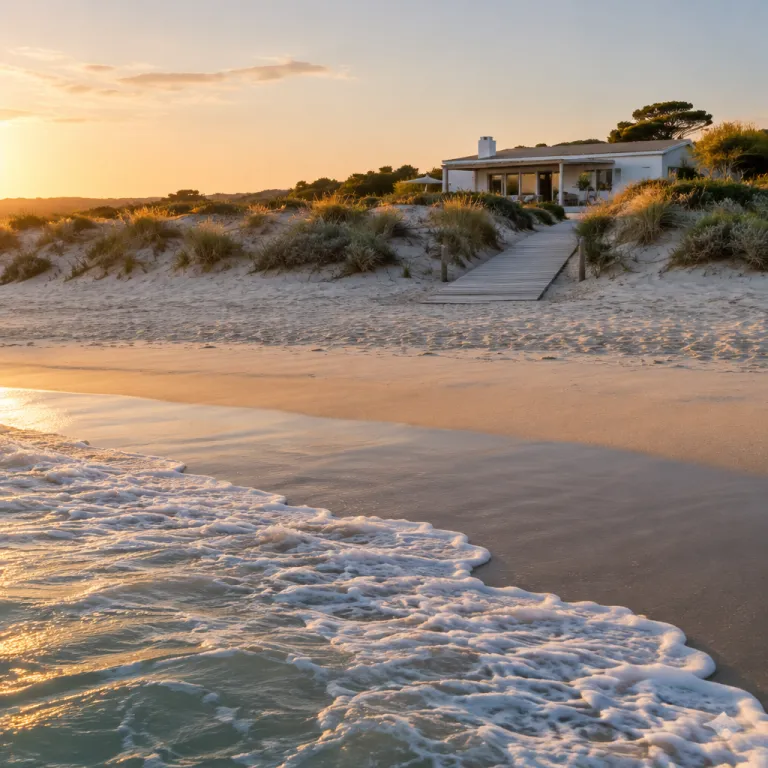
Comporta Portugal as a refined alternative to classic coastal escapes
Comporta, on Portugal’s Alentejo coast, offers a quiet seaside escape that feels intensely personal. This low-rise stretch of sand and pine forest lies about 120 km south of Lisbon, close enough for an easy trip yet far enough to feel like another world. The area sits between rice fields, dunes, and the Sado Estuary Nature Reserve, creating a sublime sense of space that serious travellers value.
The wider Herdade da Comporta estate covers roughly 12,500 hectares, where rice farmers and fishing families still shape daily life (according to figures published by Herdade da Comporta). Strict planning rules keep the beaches around Comporta uncrowded, so each praia feels like a private stage for long walks and slow afternoons. This balance between traditional Portuguese agriculture and discreet resort development is what makes local beach culture so distinctive.
Comporta village itself is a small town between Alcácer do Sal and Grândola, with whitewashed houses, a church square, and a handful of relaxed restaurants. Designers, architects, and style-conscious families come for the best things that money cannot buy: silence, light, and the scent of pine after a hot day. Many of the best hotels and villas hide behind simple wooden gates, which keeps the overall area feeling authentic rather than over-curated.
Key coastal areas and how they differ
Praia da Comporta is the main local beach, with a long boardwalk over the dunes and a couple of understated restaurant options on the sand. Families who want easy parking, lifeguards, and a beach club atmosphere often start their trip here, especially when travelling down from Lisbon for the day. The sand is wide, the Atlantic is powerful, and sunsets can be spectacular when clouds drift over the Sado estuary.
Further down the coast, Praia do Carvalhal and Praia do Pego feel more secluded, with pine forest backing the dunes and rice fields stretching inland. Praia do Carvalhal is ideal for a family-friendly swim when conditions are calm, while Pego Beach often attracts couples and groups of friends looking for a more grown-up mood. Both beaches on the Comporta side of the Alentejo coast have refined restaurant terraces where grilled fish, local rice dishes, and chilled Portuguese wines set the tone.
Between these sands and Comporta village, the landscape shifts constantly from rice fields to cork oak and back to dunes. This mosaic makes even a short drive between Praia da Comporta and Praia do Pego feel like a small road trip through rural Portugal. For travellers used to dense resort strips, the empty horizons of this part of Portugal can feel almost surreal.
Hidden gems around Comporta village and the rice fields
Beyond the famous beaches, the quiet lanes around Comporta village hide some of the area’s most rewarding experiences. Early in the morning, mist rises over the rice fields while storks circle above, and the only sounds are tractors and distant waves. Walking or cycling these backroads gives a very different perspective on the region than a simple day at the beach.
The rice culture here dates back to the nineteenth century, and local cooperatives still support farmers who work plots between the dunes and the Sado estuary. In late summer, the fields turn a luminous green that contrasts beautifully with the pale sand of nearby Praia da Comporta. Many restaurants in town and at each beach club serve local rice in seafood stews, proving that the paddies are not just scenery but a central part of Portuguese food culture in this area.
One of the most atmospheric corners of Herdade da Comporta lies near the small fishing ports on the estuary side. Here, wooden jetties lean into the mudflats, and fishing families still use small boats to reach their traps. A local fisherman once summed it up to a visitor: “The tides feed us, the rice fields clothe us, and the summer guests keep the bar open.” Spending an hour here before returning to your resort or hotel near the beach gives a sense of continuity between old livelihoods and new tourism.
Design led retreats and understated luxury
Comporta has become a reference for design-focused yet low-key stays. Properties such as Sublime Comporta and Quinta da Comporta helped define what many now call the “Comporta style”: natural materials, clean lines, and architecture that sits lightly on the land. These resorts show how the best hotels can be luxurious without dominating the landscape.
Sublime Comporta lies in a pine forest inland from Carvalhal, with villas and suites scattered around a bio pool and gardens. Guests can spend the day between the spa, the pool, and nearby Praia do Carvalhal, then return for a tasting menu that highlights local rice, fish, and organic produce. Quinta da Comporta, set near the rice fields, offers a different mood, with long views over water and reeds that change colour through the seasons.
Both resorts work closely with the Herdade da Comporta estate owners, who manage land use to balance agriculture, nature, and tourism. This collaboration helps prevent the area from turning into a dense strip of resort hotels, which is one reason why this corner of Portugal still feels exclusive. For travellers booking premium stays, this restraint is part of the destination’s real luxury.
Planning a refined trip from Lisbon to Comporta and beyond
Reaching Comporta from Lisbon is straightforward, which makes it ideal for a short coastal break or the final days of a longer trip. By car, the drive from the capital to Comporta village takes about one hour and twenty minutes, crossing the River Tejo and heading south towards the Alentejo coast. Public transport options have improved recently, with a direct bus link introduced in 2026 that reduces the need for a rental car (as noted by regional transport authorities).
When planning dates, many seasoned travellers aim for late spring or early autumn, when the beaches near Comporta are quieter but the sea is still inviting. For a broader perspective on seasonal patterns across the country, it can be useful to compare mainland conditions with those in the Azores and other Atlantic islands, especially if you are combining several regions in one itinerary. Pairing a few days on this calm stretch of coast with time in the Azores allows you to experience both Atlantic stillness and volcanic drama in a single journey.
Once dates are set, advance booking is essential for the best hotels, especially around Praia da Comporta, Praia do Carvalhal, and Pego Beach. Many properties have limited room counts, and the most family-friendly villas close to the sand often sell out months ahead. The same applies to sought-after beach restaurant tables, particularly on weekends when Lisbon residents drive down for the day.
How long to stay and where to base yourself
For a first visit, three to five nights in and around Comporta works well. This gives enough time to explore the village, rotate between different praias, and spend at least one slow afternoon in the rice fields. Guests who value deep rest often extend their trip to a full week, using the area as a base for wider Alentejo drives.
Those who want easy beach access might choose hotels or villas near Praia da Comporta or Praia do Carvalhal, where a short walk or cycle brings you to the sand. Travellers who prioritise privacy and design often prefer forest settings near Sublime Comporta or Quinta da Comporta, trading immediate sea views for quiet nights under the pines. Families sometimes split their stay between a resort with full services and a simpler house closer to town, which keeps both adults and children engaged.
Whichever base you choose, renting a car remains the most flexible option for moving between beaches, restaurants, and the Sado estuary. Distances are short, but public transport within the area is limited, and taxis can be scarce outside peak hours. A car also makes it easier to explore inland villages and vineyards beyond the Herdade da Comporta estate.
Beaches, beach clubs, and where to eat in Comporta Portugal
The beaches around Comporta are long, sandy, and backed by dunes rather than concrete. Praia da Comporta, closest to the village, is often the first stop for new visitors, with a broad stretch of sand and a relaxed beach club scene. Wooden walkways protect the dunes, and lifeguards operate in season, which reassures families with younger children.
Praia do Carvalhal lies a short drive south, framed by pine forest and low cliffs that give the area a more intimate feel. Here, a couple of beach restaurant terraces serve grilled fish, seafood rice, and fresh salads, making it easy to spend the whole day without leaving the sand. The atmosphere is family-friendly but slightly quieter than at the main Comporta beach, especially outside peak weekends.
Further along, Praia do Pego and Pego Beach offer perhaps the most sublime stretch of sand in the region. The sea can be powerful, yet on calmer days the water is perfect for long swims followed by late lunches at a stylish beach restaurant. Many regular visitors consider this one of the best beaches in Portugal for those who value space, good food, and a discreet crowd.
Dining from village squares to the dunes
In Comporta village, small restaurants around the main square serve traditional Portuguese dishes built around local rice, fish, and seasonal vegetables. Menus often feature seafood rice, grilled cuttlefish, and simple desserts that highlight regional ingredients rather than elaborate techniques. Booking is wise, especially on summer evenings when both residents and visitors fill the terraces.
At the beaches near Comporta, lunch tends to be the main event, with long meals that stretch into late afternoon. Beach clubs at Praia da Comporta, Praia do Carvalhal, and Pego Beach usually require reservations for front-row tables, particularly for larger family groups. Many travellers plan their day around a single long lunch, swimming before and after to balance indulgence with movement.
Within resorts such as Sublime Comporta and Quinta da Comporta, dining becomes more experimental, with tasting menus and wine pairings that showcase contemporary Portuguese cooking. These hotel restaurants often work closely with local producers, from rice farmers to small vineyards in the Alentejo hinterland. For guests who care about provenance, this connection between plate and landscape is one of the best things about staying on site.
Nature, wildlife, and slow experiences around Herdade Comporta
Comporta sits on the edge of the Sado Estuary Nature Reserve, one of the most important wetlands in Portugal. This protected area covers nearly 24,000 hectares, sheltering flamingos, storks, and more than 200 bird species throughout the year (according to data published by the reserve’s managing authorities). Boat trips from nearby ports offer the chance to see dolphins that live permanently in the estuary, a rare sight in mainland Europe.
Early morning and late afternoon are the best times to appreciate how the light changes over the rice fields and salt marshes. Photographers often base themselves in hotels near the beach, then drive a few minutes inland to capture reflections of clouds in flooded paddies. For families, simple activities such as cycling quiet lanes or walking wooden walkways over the dunes can be as memorable as any organised excursion.
Those interested in Atlantic weather drama might also enjoy contrasting this usually calm stretch of coast with the wilder conditions often found in the Azores during storm season. While Comporta generally offers gentler seas than the mid-ocean islands, winter swells can still be impressive from the safety of the dunes. Watching waves roll in from a sheltered beach restaurant terrace becomes a quiet spectacle in itself.
Balancing preservation and premium tourism
The Herdade da Comporta estate has long combined agriculture, forestry, and controlled tourism, which shapes how new projects emerge. Strict building regulations near the shore limit height and density, ensuring that even new resort developments remain low profile. This approach protects both the visual landscape and the habitats that make the area special.
Local communities, estate owners, and conservation agencies work together to maintain this balance between rice fields, pine forest, and beaches. Tourism brings income and opportunities, yet there is constant debate about how much development the area can absorb without losing its character. For now, the emphasis remains on fewer, better hotels rather than mass-market expansion.
For travellers, this means accepting higher prices and planning ahead in exchange for space, quiet, and a sense of authenticity. Choosing properties that invest in eco-friendly architecture and local partnerships helps reinforce the model that keeps this part of Portugal unique. In practice, your booking becomes part of a wider story about how coastal destinations can evolve without erasing their roots.
Family friendly stays, practical tips, and combining Comporta with the Azores
Despite its reputation for design and style, Comporta works very well for families. The long, gently shelving sands at Praia da Comporta and Praia do Carvalhal offer plenty of room for children to play, while lifeguards in season add reassurance. Many resorts and rental homes provide family-friendly amenities such as pools, bikes, and shaded terraces.
When travelling with children, it helps to structure the day around the heat and tides. Mornings are ideal for active time on the beach, while afternoons can be spent by the pool or exploring shaded lanes around the village. Early dinners at a beach restaurant or in town keep evenings relaxed, especially after a full day in the sun.
For multi-stop itineraries, pairing Comporta with the Azores creates a compelling contrast between calm rice fields and volcanic islands. Cultural experiences such as summer festivals, bullfights, and marchas on the islands add depth to a trip that might otherwise focus only on beaches. Flying from Lisbon to the Azores after a few days in Herdade da Comporta allows you to experience both sides of the Atlantic personality in one holiday.
Seasonal advice and on the ground etiquette
Shoulder seasons around late spring and early autumn usually offer the best balance of pleasant temperatures, open services, and manageable crowds. High summer brings more energy to the beach club scene but also more traffic from Lisbon, so early restaurant and hotel bookings become essential. In cooler months, some venues close, yet the light over the rice fields and empty beaches can be extraordinary.
On the practical side, bring insect repellent for evenings near the rice fields and plenty of sunscreen for long days on the sand. Off season, beach facilities may be limited, so carrying water and snacks is wise, especially with children. Respect for dunes, wildlife, and local communities is not just polite; it is central to keeping this stretch of coast the kind of place that thoughtful travellers seek out.
As one local summary puts it, “Visit May–June or September for fewer crowds”, “Arrive by car or direct bus (running since 2026)”, “Book hotels and restaurants ahead in high season”, “Bring insect repellent near rice fields”, “Use sunscreen and water; beach facilities limited off-season”. These simple guidelines, combined with careful hotel choices, will help you experience the best things this quiet corner of Portugal has to offer. In return, your presence supports rice farmers, fishing families, and the wider community that keeps Comporta’s understated magic alive.
Key figures and context for Comporta Portugal
- The civil parish that includes Comporta village covers about 150.54 km², which means low population density and plenty of open space between beaches, rice fields, and forest (according to data from Portugal’s national statistics institute, INE).
- The local population is just over 1,000 inhabitants, so visitor numbers in peak season can easily exceed resident numbers, reinforcing the need for respectful tourism (INE census data for the parish).
- The Sado Estuary Nature Reserve extends across roughly 23,971 hectares, making it one of Portugal’s largest protected wetlands and a major reason for strict building rules near the shore (as reported by the reserve’s management body).
- Driving distance from Lisbon to Comporta is about 120 km, or around one hour and twenty minutes by car, which explains why many Lisbon residents treat it as both a weekend escape and a feasible day trip.
- Praia da Comporta, Praia do Carvalhal, and Praia do Pego are consistently cited among the best beaches on the Alentejo coast, combining Blue Flag–level water quality with limited construction along the dunes (according to regional tourism boards and beach quality programmes).
FAQ about Comporta Portugal for discerning travellers
How far is Comporta from Lisbon, and do I need a car ?
Comporta lies about 120 km south of Lisbon, and the drive usually takes around one hour and twenty minutes. A direct bus connection now exists, but a rental car remains the most flexible option for moving between the village, the beaches, and nearby rice field areas. Taxis and ride-hailing services are limited once you arrive, especially outside peak season.
Which are the best beaches in Comporta for a first visit ?
For a first stay, Praia da Comporta is ideal thanks to its wide sand, lifeguards in season, and easy access from town. Praia do Carvalhal offers a slightly quieter, family-friendly atmosphere with good beach restaurant options and a more intimate setting. Praia do Pego, or Pego Beach, is often considered the most sublime stretch, perfect for long lunches and sunset walks.
Is Comporta suitable for families with children ?
Comporta works very well for families who enjoy nature and simple pleasures. The long, gently shelving beaches at Praia da Comporta and Praia do Carvalhal provide plenty of safe space for play, while many resorts and rental homes offer pools and gardens. Planning around the heat, booking family-friendly restaurants, and renting a car will make the experience smoother.
When is the best time to visit Comporta for fewer crowds ?
Late spring and early autumn usually offer the best balance of pleasant weather, open services, and manageable visitor numbers. High summer brings a livelier beach club scene but also more traffic from Lisbon and higher demand for the best hotels and restaurants. In cooler months, some venues close, yet the light and quiet can be exceptional for those seeking deep rest.
How does Comporta balance luxury tourism with environmental protection ?
The Herdade da Comporta estate operates under strict planning regulations that limit building height and density near the coast. Mixed land use keeps rice farming, forestry, and tourism in balance, while the nearby Sado Estuary Nature Reserve imposes additional safeguards for habitats and wildlife. Choosing eco-conscious hotels and respecting dunes, trails, and local communities helps visitors support this model in practice.