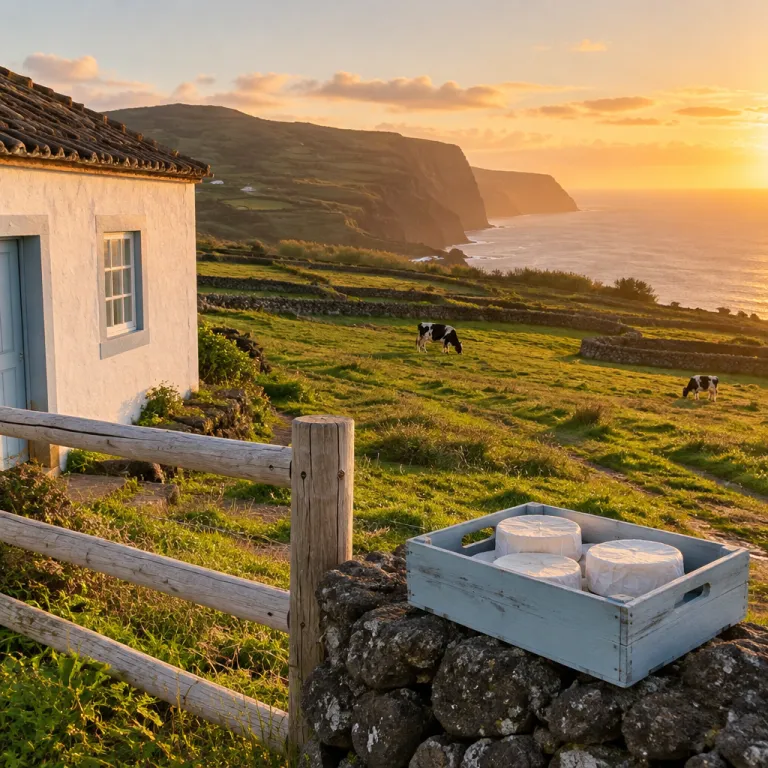
Why São Jorge should be your third Azorean island
São Jorge sits long and narrow between Pico and Terceira, an island that many itineraries skim past. For a solo traveler shaping a ten day Azores journey, adding this pasture rich ridge turns São Jorge cheese travel from a quick tasting stop into a fully fledged narrative of land, milk and Atlantic weather. The result is a quieter chapter between headline islands, where the natural beauty of each fajã and every slice of Queijo São Jorge slows your travel rhythm without diluting momentum.
The island belongs to Portugal yet feels almost like its own republic of cows, cliffs and cheeses. Here, dairy production is not a side show but the economic spine of São Jorge, and that reality shapes everything from the pace of Monday to Friday life to the way luxury stays frame their views over green slopes and the channel to Pico. For a solo explorer, a cheese focused stay means waking to bells from grazing herds, walking down to a lava fajã, then returning to a glass of Azorean wine and a board of delicious cheese that actually comes from the fields you crossed.
Compared with São Miguel or Faial, São Jorge offers diverse experiences in a smaller, more legible package. You still get serious hiking, real Portuguese village life and Atlantic drama, yet the scale of the island landscape makes it easy to move between Velas, Calheta and the eastern Topo area without burning time or budget. That balance is exactly why São Jorge works so well as the third island on a ten day tour, especially for solo travelers who value culinary excellence and a sense of being gently off the main Azores circuit.
Inside Queijo São Jorge: from pasture to protected cheese
Queijo São Jorge is the only Azorean cheese with Denominação de Origem Protegida (DOP) status, and that matters for serious food travelers. The cheese is a semi hard wheel made from raw cow's milk, aged for at least three months in cool island cellars that smell of salt and hay. As the rind dries and the paste firms, the flavors shift from buttery and mild to rich, peppery and almost spicy, giving solo travelers a clear tasting ladder to climb across different ages.
The story begins in the high pastures, where dairy farmers raise cows and produce milk that is unusually intense thanks to volcanic soils and constant Atlantic humidity. That milk flows to local cooperatives and to the Uniqueijo – União de Cooperativas Agrícolas de Lacticínios de São Jorge, based near Beira on the south coast, where cheesemakers use copper vats and wooden molds to maintain traditional cheese making techniques while meeting modern hygiene standards. Under DOP rules, wheels typically weigh between 8 and 12 kilograms and age from three to over twelve months, with labels indicating maturity so visitors can compare styles.
For a solo traveler, the key is choosing the right factory visit, because not every São Jorge facility treats guests the same way. Some dairies along the main Velas–Calheta road handle coach tour groups with quick, guided tastings and a shop heavy focus, while smaller units closer to Topo or inland hamlets offer more carefully curated encounters with Portuguese artisans at work. As one cheesemaker explained during a morning visit, “If you understand our grass and our weather, you understand our cheese.” A smart routing pairs a tour of a working production floor with an afternoon hike, much like pairing a caldeira rim walk on Faial with a stay chosen from a dedicated stay and walk pairing guide.
Choosing the right cheese factory visit and tasting style
São Jorge cheese tourism works best when you match your personality to the right cheese factory, rather than chasing the most famous name. On the western half of the island, near Velas, larger facilities such as the main Uniqueijo visitor area welcome guests Monday to Friday, usually in the late morning and mid afternoon, with structured, guided tours that move from viewing galleries over the vats to aging rooms stacked with wheels of Queijo São Jorge in various stages. These visits suit travelers who like clear explanations of cheese production, a defined privacy policy around photography and a predictable tasting flight at the end.
Smaller dairies closer to Calheta or the Topo headland often skip the formal tour script and instead let you stand almost shoulder to shoulder with workers salting curds or turning wheels. Here, the experience is more intimate and less polished, but the trade off is a stronger sense of how Portuguese rural life actually functions on an island where milk is currency. You might taste young cheeses still bright with lactic flavors, then older wheels whose rich, nutty notes echo the basalt cliffs outside.
Whichever style you choose, insist on tasting at least three ages of São Jorge cheese to understand how time reshapes both texture and taste. Pair the delicious cheese with a glass of Azorean wine from Pico or Terceira, and you suddenly see how São Jorge dairy culture plugs into a wider network of islands and vineyards across Portugal. For context on how the region is managing growth at the upper end of the market, it is worth reading about the latest Azores tourism pact for luxury travelers and what recent policy changes mean for high end stays.
Where to stay for fajã trails and cheese focused days
São Jorge’s accommodation scene is compact but quietly sophisticated, ideal for solo travelers who want luxury without fuss. Velas, the main port town, works best if your São Jorge cheese tourism revolves around factory visits, boat trips and easy access to ferries linking the central islands of the Azores. Calheta, further along the south coast, places you closer to the trailheads for Fajã dos Cubres and Fajã do Ouvidor on the north shore, making it the stronger base if hiking and natural beauty outrank nightlife.
High end stays in Velas tend to lean on sea views and proximity to the marina, with rooms that frame Pico’s volcanic cone across the channel and breakfast tables laden with cheeses, local honey and fresh milk yogurt. Calheta’s premium guesthouses and small design forward properties feel more rural, often set among fields where cheese production literally hums in the background, and where a carefully curated board of Queijo São Jorge and charcuterie appears almost by default at sunset. For travelers who want to wake near the eastern cliffs, a stay around Topo offers diverse perspectives on the island landscape, though you will drive more for both tours and dinners.
Wherever you sleep, use your base as a hinge between food and landscape. One day might start with a guided visit to a Queijo São Jorge facility, continue with a hike down to a fajã lagoon, then end with a dinner that pairs Portuguese wine and local cheese in a way that quietly defines culinary excellence. On another day, you might cross reference your São Jorge meals with a volcanic stew experience on São Miguel, using a trusted guide to eating cozido das Furnas beyond tourist tables to keep your wider Azores food story coherent.
Routing São Jorge into a ten day Azores itinerary
For a solo traveler, the smartest São Jorge cheese tourism plan is to treat the island as a two night, three day chapter between Pico and either Faial or São Miguel. Arrive by ferry from Pico if seas are calm and you enjoy the slow approach to the cliffs, or choose the short flight from Horta on Faial when you prefer to protect time and stomach for cheese and hiking rather than swells. Either way, São Jorge slots neatly into a central islands loop without turning your travel into a logistics puzzle.
Day one can focus on orientation and your first contact with São Jorge cheese, perhaps through a late afternoon guided tasting in Velas followed by a walk along the harbor as the light drops behind Pico. Day two becomes your deep São Jorge food immersion, starting with a morning tour of a working factory, then an afternoon hike to Fajã dos Cubres or Fajã do Ouvidor where the natural beauty of the cliffs, lagoons and Atlantic spray frames the agricultural backbone of the island. On day three, you might squeeze in a final tasting of different cheeses and a last coffee in Calheta before boarding a ferry back to Pico or a flight onward to another of the Azores islands.
To make this concrete, imagine a simple grid: 09:00 ferry from São Roque do Pico to Velas, midday check in and lunch, 16:00 tasting at a cooperative shop; next day, 10:00 factory tour booked through your hotel, 14:00 transfer to the Fajã dos Cubres trail, 19:30 dinner in Calheta; final morning, 10:30 bus or taxi back to Velas for a 13:00 sailing or mid afternoon flight. What makes this routing work is the way São Jorge slows you down without stranding you. The island’s scale keeps transfers short, yet the combination of milk driven agriculture, dramatic fajãs and a culture built around Portuguese cheese making gives the stop real depth. For solo travelers used to moving fast, that enforced pause over a board of delicious cheese and a glass of wine can be the moment the whole São Jorge journey finally makes sense.
Why São Jorge especially suits solo luxury travelers
Traveling alone through the Azores, you quickly learn which islands reward solitude and which feel built for groups. São Jorge sits firmly in the first category, because São Jorge cheese tourism is inherently slow, sensory and easy to enjoy at your own pace without needing shared activities. You can spend an hour in a factory shop comparing flavors across different ages of Queijo São Jorge, then take your chosen wedge back to a terrace and let the Atlantic do the talking.
The social fabric of the island also works in your favor as a solo guest. Dairy farmers, cheesemakers and cooperative staff are used to visitors asking direct questions about milk, production volumes and aging times, so conversations start naturally around the tasting counter rather than at a bar. When you hear, "What is São Jorge cheese?" and "How is São Jorge cheese made?" followed by "Where can I buy São Jorge cheese?" from other travelers, you realise that São Jorge’s cheese culture gives you an easy script for connection without forced small talk.
Luxury here is less about chandeliers and more about time, space and the beauty of a landscape that still feels anchored in agriculture. High end stays on the island ridge tend to be small, owner managed and quietly attentive, with a privacy policy that respects your need for both interaction and retreat. For a solo explorer who values carefully curated experiences, from guided hikes to private tastings of Queijo São Jorge and Portuguese wine, São Jorge offers diverse ways to feel both held and free across one of Portugal’s most characterful islands.
FAQ about São Jorge cheese and travel
What is São Jorge cheese and why is it special ?
São Jorge cheese is a semi hard cow's milk cheese produced exclusively on São Jorge Island in the Azores. It is made from unpasteurised milk and aged for at least three months, which creates a firm texture and a rich, slightly spicy flavour profile. Its protected denomination status and deep link to local pastures make it central to any São Jorge cheese tourism itinerary.
How is São Jorge cheese made in traditional dairies ?
Local cheesemakers heat raw milk in copper vats, add cultures and rennet, then cut and stir the curd before pressing it into wooden molds. The wheels are salted and transferred to aging rooms, where they mature on shelves for a minimum of three months under controlled humidity. This traditional cheese making process, maintained by cooperatives such as Uniqueijo, preserves both Portuguese heritage and consistent quality.
Can I visit cheese factories on São Jorge without a group tour ?
Several dairies on São Jorge welcome independent visitors during weekday hours, typically from Monday to Friday, though exact times vary. Larger factories near Velas often offer structured, guided visits, while smaller units may allow informal viewing of the production floor and aging rooms. It is wise to call ahead or ask your hotel to confirm which cheese production sites are open to solo travelers on the day you plan to tour.
How many days should I spend on São Jorge during an Azores trip ?
Two nights, giving you almost three full days, is usually enough to combine São Jorge cheese tourism with one or two fajã hikes and some unhurried village time. This duration fits neatly into a ten day itinerary that also includes Pico and either Faial or São Miguel. Travelers with a strong interest in hiking or food may choose to extend their stay to four nights to explore more of the island coastline and additional cheeses.
Where can I buy São Jorge cheese after leaving the island ?
São Jorge cheese is widely sold across the Azores islands in supermarkets, specialty shops and airport stores, often in vacuum packed wedges suitable for travel. On mainland Portugal, you will find it in many delicatessens and larger grocery chains, usually labelled as Queijo São Jorge DOP. Some international markets also stock it, but the broadest range of ages and flavors remains on the island itself, especially at factory shops and cooperative outlets.